Your Scalp Has a Microbiome Too
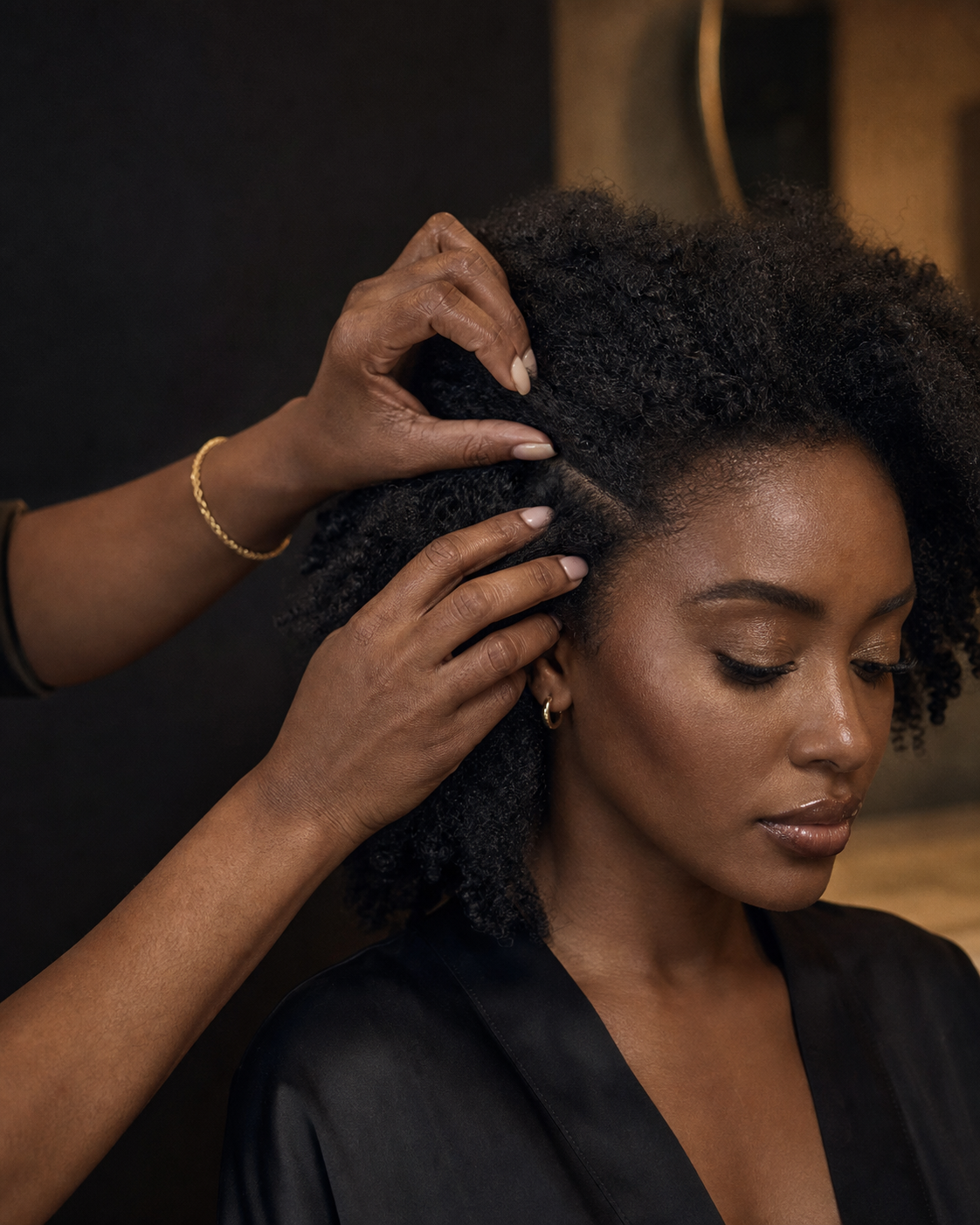
What science actually says about scalp health, dandruff, inflammation and hair loss
When we talk about scalp health, we usually talk about what we can see. Flakes. Oil. Dryness. Redness. Buildup. Thinning. Hair loss.
But there is an entire microscopic ecosystem living on your scalp that you cannot see during a traditional shampoo service, and researchers are becoming increasingly interested in the role it may play in scalp health.
It’s called the scalp microbiome. And before the word bacteria has you reaching for the strongest clarifying shampoo you own, hear me out:
Your scalp is not supposed to be sterile. A healthy scalp naturally contains bacteria, fungi and other microorganisms. The goal is not to eliminate them. The bigger question is how these organisms interact with one another, your scalp barrier, your oil production, your immune system and the environment around them.
Researchers are learning that when this ecosystem changes, what scientists call dysbiosis, those changes may be associated with conditions such as dandruff and seborrheic dermatitis and are now being investigated in several forms of hair loss.
First, What Exactly Is the Scalp Microbiome?
Your scalp provides a warm, sebum-rich environment where microorganisms naturally live. Some of the organisms researchers consistently find include: Malassezia, a type of yeast that naturally lives on human skin.
Cutibacterium, bacteria commonly found in areas with higher oil production. Staphylococcus, another group of bacteria commonly found on the skin. None of these organisms are automatically “bad.”
That part matters. Having Malassezia on your scalp does not automatically mean you have dandruff. Having bacteria on your scalp does not mean your scalp is dirty or infected.
Instead, researchers are becoming more interested in the relationships and balance between microorganisms, along with how they interact with the scalp’s natural barrier and immune system.
Think less: “How do I kill all the bacteria?” And more: “What kind of environment is my scalp creating?”
Where Dandruff Gets Interesting
For years, conversations about dandruff often focused heavily on one organism: Malassezia. Malassezia still matters, but the story is becoming much more complicated.
A systematic review examining studies of dandruff and seborrheic dermatitis found differences not only in Malassezia populations but also in the balance between bacteria such as Cutibacterium and Staphylococcus.
Researchers have also found relationships between microbial changes, scalp barrier disruption, itching and increased water loss through the skin. More recent research is describing dandruff as an interaction between:
Microorganisms + scalp oils + barrier function + inflammation + individual susceptibility. In other words, flakes are not simply “dirt sitting on the scalp.”
And repeatedly scraping, picking or aggressively exfoliating the scalp because you see flakes may actually create additional irritation. That is why scalp care should start with understanding why the scalp is flaking rather than simply trying to remove every visible flake.
So Does an “Unbalanced Microbiome” Cause Hair Loss?
This is where we need to be careful. There is growing scientific interest in what researchers are calling the scalp microbiome-hair axis, meaning the possible relationship between microorganisms, follicular biology, inflammation, immune signaling and hair growth.
Researchers have identified differences in microbial communities in people with several scalp and hair disorders. But an association is not the same thing as proof of cause.
A 2026 systematic review examining follicular microbiome research across inflammatory hair and scalp disorders found recurring changes involving Cutibacterium and Staphylococcus. However, researchers also emphasized that study methods varied considerably and that we still do not know whether these microorganisms are causing disease, responding to disease, or participating in a larger biological process.
That distinction is huge. If someone has thinning hair, we cannot look at the scalp and confidently say: “Your microbiome is causing your hair loss.”
Hair loss can involve genetics, hormones, inflammation, autoimmune conditions, nutritional deficiencies, medication, illness, physical tension and many other factors. The microbiome may eventually prove to be another piece of that puzzle, but science is still assembling the picture.
A Study I Found Especially Interesting
One 2026 study looked specifically at an African American cohort experiencing self-reported hair loss. Researchers collected samples from both sparse-hair and normal-hair areas on the same participants' scalps and found measurable differences in their bacterial communities.
That is especially interesting because textured-hair populations have historically been underrepresented in dermatology and hair research. But there is an important limitation:
The study included only 36 people. So while the findings deserve attention, they are not enough to establish a universal “hair-loss microbiome” or prove that correcting certain bacteria will restore hair.
This is promising research. It is not yet a diagnostic tool. And that distinction is exactly how I want scalp education at Treasuring Tresses to operate: curious about emerging science without getting ahead of it.
Can I See Your Microbiome With My Scalp Camera?
No. And this is one of the biggest misconceptions I want clients to understand. Scalp-analysis cameras are incredibly useful because magnification can help us observe things such as:
- visible flaking
- oil and product accumulation
- redness
- hair-shaft variation
- broken hairs
- follicular openings
- density patterns
- areas that warrant closer monitoring or medical evaluation
But the camera is not sequencing bacteria or fungi. I cannot zoom in and tell you that you have too much Malassezia, too little Cutibacterium or “microbiome dysbiosis.”
Determining microbial composition in research typically requires laboratory techniques such as DNA sequencing. So scalp analysis gives us visual information. Your health history gives us context.
And when something falls outside the cosmetic scope of practice, a dermatologist or healthcare provider gives us medical evaluation and diagnosis. Those pieces should complement one another, not compete.
What About “Microbiome-Friendly” Hair Products?
You are probably going to see this phrase more and more. Microbiome-friendly. Microbiome balancing. Probiotic scalp care. Prebiotic scalp care. The marketing is moving faster than the science.
Researchers are actively studying ways to modify the scalp environment and microbial communities, but there is currently no universally accepted salon test that tells us someone has an “imbalanced scalp microbiome,” nor is there one universally defined microbial profile that every healthy scalp should have.
Even healthy microbiomes vary between people. That means I would be cautious of any product promising to “reset,” “restore” or “rebalance” your microbiome as though we currently have a single perfect microbial formula for every scalp.
Some products may absolutely improve scalp symptoms. That does not necessarily mean they did so because they “fixed the microbiome.”
Cleansing Still Matters
Learning about the microbiome does not mean we should stop shampooing because we are afraid of washing away good bacteria. Your scalp continuously produces oil, sheds skin cells and accumulates sweat, environmental debris and styling products.
Regular cleansing remains part of healthy scalp maintenance. The goal is appropriate cleansing without repeatedly creating unnecessary irritation. Someone with an oily scalp, dandruff, an active lifestyle or heavy product use may need a very different cleansing routine from someone with a dry scalp and minimal product use.
There is no universally perfect wash schedule. Scalp care should respond to the scalp in front of us, not a social-media rule.
What This Means at Treasuring Tresses
Scalp-first care is not about chasing every new wellness buzzword. It is about understanding that healthy hair exists within a much larger biological environment.
That environment includes: the scalp barrier oil production inflammation microorganisms hair-care practices internal health and the hair follicle itself That is why scalp care at Treasuring Tresses starts with observation, conversation and education.
A head spa can cleanse the scalp, remove excess debris, support comfortable scalp care and create an environment where healthy hair-care practices are easier to maintain.
What it cannot do is diagnose a disease, identify microorganisms through magnification or guarantee hair regrowth. And knowing the difference is part of responsible scalp care.
The Crown Takeaway
Your scalp does not need to be sterile. It needs to function well. Science is showing us that the microorganisms living there may be much more involved in scalp health than we previously understood.
But we are still learning where the microbiome fits into the bigger picture of inflammation, dandruff, scalp disorders and hair loss. So instead of chasing the newest “microbiome balancing” bottle on the shelf, start with the fundamentals:
Cleanse appropriately. Reduce unnecessary irritation. Pay attention to persistent symptoms. Protect the scalp barrier. Address tension and damaging hair practices. And seek medical evaluation when scalp changes or hair loss require more than cosmetic care.
Because scalp health is rarely about one organism, one product or one treatment. It is an ecosystem. And the more we understand that ecosystem, the better we can care for the crown growing from it.
References
- Shah RR, et al. Scalp microbiome: a guide to better understanding scalp diseases and treatments. Archives of Dermatological Research. 2024;316:495.
- Tao R, Li R, Wang R. Skin microbiome alterations in seborrheic dermatitis and dandruff: A systematic review. Experimental Dermatology. 2021;30:1546–1553.
- Deng L, et al. Advances in Scalp Microbiome Research: Molecular Insights into the Metabolism-Inflammation-Barrier Axis and Dandruff Pathogenesis. Molecules. 2026;31:2093.
- Li T, et al. The Scalp Microbiome–Hair Axis: Mechanisms and Therapeutic Translation. Research. 2026;9:1409.
- Franz A, et al. The follicular microbiome in hair-follicle-associated inflammatory diseases: A systematic review. Clinical and Experimental Dermatology. 2026.
- Malas J, et al. Scalp microbiome differences in subjects with self-reported hair loss: A quantitative approach to microbial dysbiosis. International Journal of Cosmetic Science. 2026.
Care for your scalp.
Scalp care at Treasuring Tresses starts with observation, conversation and education.
Explore Scalp Care