GLP-1 Medications and Hair Loss: What Your Shedding Is Actually Telling You
Your weight changed—and weeks later, your ponytail did too.
If increased shedding follows GLP-1 treatment or rapid weight loss, the pattern and timeline may help explain what your body is communicating.
You stepped on the scale and the number moved in the right direction. But somewhere between the victory and the mirror, you noticed something else: your ponytail feels thinner, your fingers come away from your scalp with more hair than usual, and the drain after wash day looks alarming.
If you are taking a GLP-1 medication such as Ozempic, Wegovy, Mounjaro, or Zepbound and have noticed increased shedding, you are not imagining it. Before you panic, stop your medication, or assume the worst, it helps to understand what may be happening inside your body and what the pattern means for your hair.
After 15 years behind the chair working with natural hair, one lesson remains clear: your hair always tells the truth. The question is whether you know how to listen.
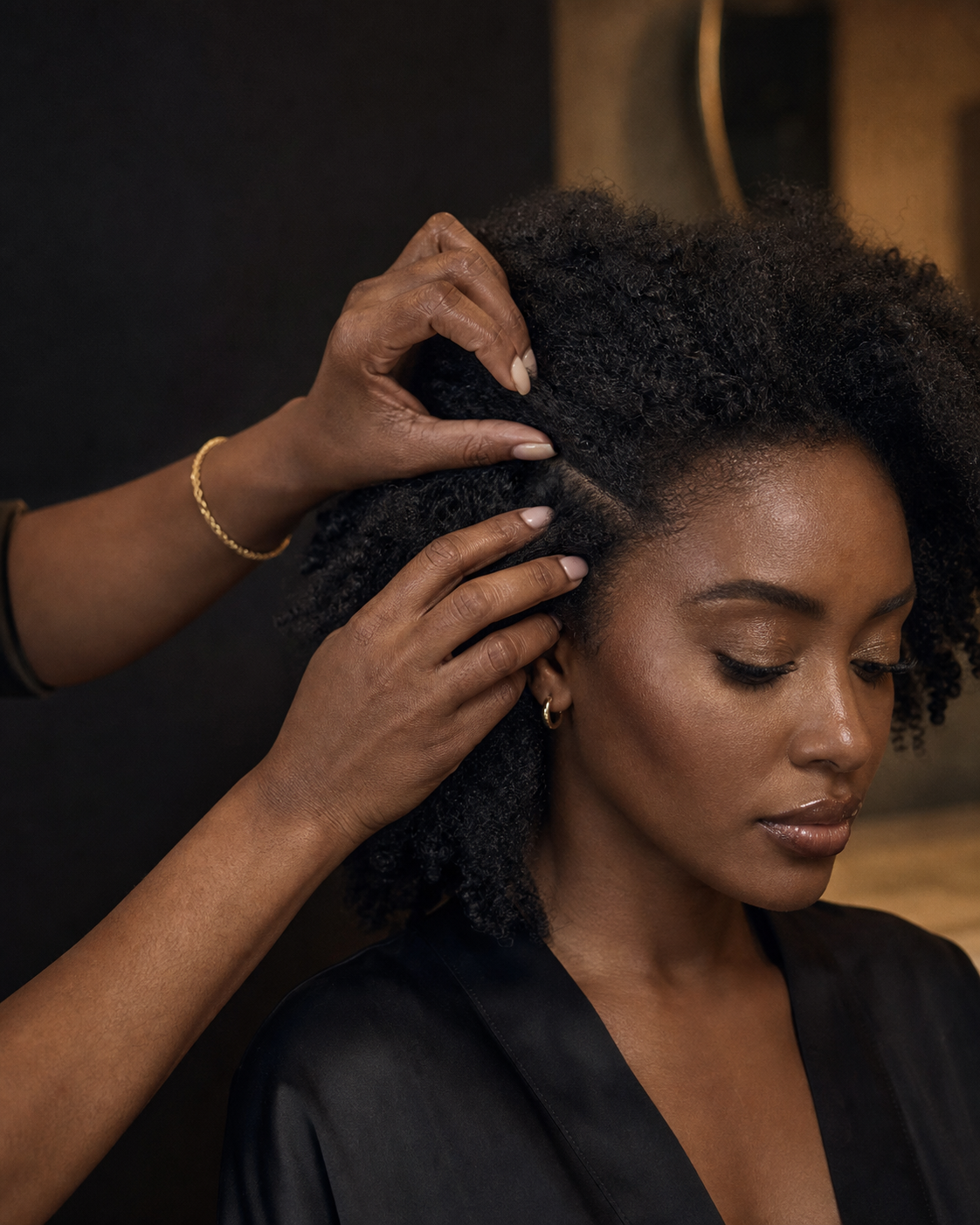
First, Let's Talk About How Hair Actually Grows
Hair does not grow in one continuous cycle. Each follicle moves through its own repeating sequence. During anagen, cells in the follicle actively produce and lengthen the hair strand. Catagen is a short transition in which active production pauses and the lower follicle begins to regress. During telogen, the fully formed hair rests in the follicle before it is released and the follicle prepares to begin a new growth phase. Because neighboring follicles are not synchronized, some hairs can be growing while others are resting or shedding. That is normal.
The Shedding May Appear After The Trigger
Hair can report a physical change after the original moment has passed, which is why the sequence matters.
- 01The Trigger
The Body Experiences A Change
Treatment-related appetite changes can coincide with rapid weight loss, reduced intake, and other physical stress. Those changes may affect the hair cycle before shedding is visible.
- 02Six To Twelve Weeks Later
The Timeline Becomes Visible
A hair-cycle response may stay hidden at first. Compare when treatment began or changed, when weight loss accelerated, and when increased shedding became noticeable.
- 03Three To Six Months
Look For Meaningful Change
Improvement is gradual, not immediate. Watch for the shedding to stabilize and for early regrowth over the next three to six months, and look deeper if the pattern worsens or does not begin to improve.
What GLP-1 Medications Actually Do to the Body
GLP-1 receptor agonists mimic a hormone that regulates appetite, slow digestion, and signal fullness to the brain. The rapid physiological changes they can produce, particularly when significant weight is lost in a short period, can place real stress on the body.
Under stress, the body prioritizes the work required for immediate health and tissue maintenance. For example, if appetite suppression leads to consistently eating less, the body still needs energy, protein, vitamins, and minerals to support the heart, brain, muscles, immune function, and tissue repair. Active hair production also requires a steady supply of nutrients, but it is not essential to short-term survival. When intake or nutrient reserves fall short, more follicles may pause active growth and move toward the resting phase, with increased shedding becoming visible weeks later.
1. Rapid Weight Loss
Losing weight quickly, even intentionally, is a physiological stressor. Sudden, significant calorie reduction can signal scarce resources, shifting energy away from hair production. Follicles in active growth may enter rest early, setting up a delayed shedding event. The faster the weight loss, the greater the potential disruption.
2. Reduced Appetite and Protein Intake
Appetite suppression can reduce food intake overall, and protein may suffer. Hair is made largely of keratin, a protein, and follicles need a consistent supply of amino acids to produce new strands. When protein intake falls, the body protects organs and critical functions first while follicles may become less active.
3. Nutritional Deficiencies
Eating less can also reduce nutrients that support hair growth and scalp health. The source article highlights:
- Iron and ferritin, the stored form of iron
- Zinc for follicle function and tissue repair
- Biotin and other B vitamins for keratin production and cellular metabolism
- Vitamin D for follicle cycling and immune regulation
4. Physical Stress on the Body
Illness, surgery, hormonal shifts, and significant weight loss can activate the stress response associated with telogen effluvium. Early nausea, fatigue, or digestive disruption may add to the body's workload. When the body is working hard, the hair waits.
Temporary Shedding vs. Something More
Not all shedding is the same. The pattern most often associated with rapid weight loss and GLP-1 treatment is described in the source article as:
- Diffuse, spread across the whole scalp rather than concentrated in one area
- Temporary, usually resolving within three to six months once the trigger is addressed
- Not accompanied by pain, burning, or itching
- Not leaving smooth, shiny bald patches
If your experience fits that description, there is reason for hope. The shedding may be a response to what your body went through, not a forecast of permanent loss.
What You Can Actually Do Right Now
Trace the Timeline
Note when the shedding began, when medication started or changed, and when weight loss accelerated. The trigger often happened six to twelve weeks before shedding became noticeable, and that timeline can help your care team assemble the picture.
Protect Your Protein
Work with your doctor or a registered dietitian to meet your protein needs while eating less. Consistent protein intake is foundational, but individual needs should be set with qualified guidance.
Request Comprehensive Labs
Ask your doctor whether checking iron, ferritin, zinc, vitamin D, and B12 is appropriate. Ferritin may not be included in a standard panel, so discuss the full picture instead of guessing or self-supplementing.
Support Your Scalp
Keep scalp care gentle and consistent. Regular massage may support circulation, while gentle cleansing helps keep the scalp clear without stripping. Professional scalp care can complement, but does not replace, medical evaluation.
Give It Time, but Not Forever
Telogen effluvium commonly improves as the body stabilizes, but regrowth is not instant. The source article allows three to six months for meaningful change and recommends digging deeper if improvement is not appearing around month four or five.
A Word From Behind the Chair
I have sat across from women who were celebrating weight loss and grieving their hair at the same time. Both experiences are real, and neither cancels the other.
In many cases, the loss is not permanent. It is your body communicating: a signal, not a sentence. When you read the pattern, trace the trigger, and take informed action, fear can give way to authority over your own health.
That is what Crown Classroom is for: real education, real science, and real talk from someone who has cared for natural hair for 15 years and is committed to raising the standard of professional hair care.
Listen to the Signal
Do not stop or change a prescribed medication on your own. Trace the timeline, discuss nutrition and laboratory testing with your care team, support your scalp gently, and pay attention to the pattern.
Keep learning what your hair is telling you.
Read every Crown Classroom lesson in the Treasuring Tresses Journal, and bring medication or health concerns to the qualified professionals on your care team.
Explore the Journal